
Bear Kills Two Siblings in Chhattisgarh Field as India's Human-Wildlife Crisis Deepens
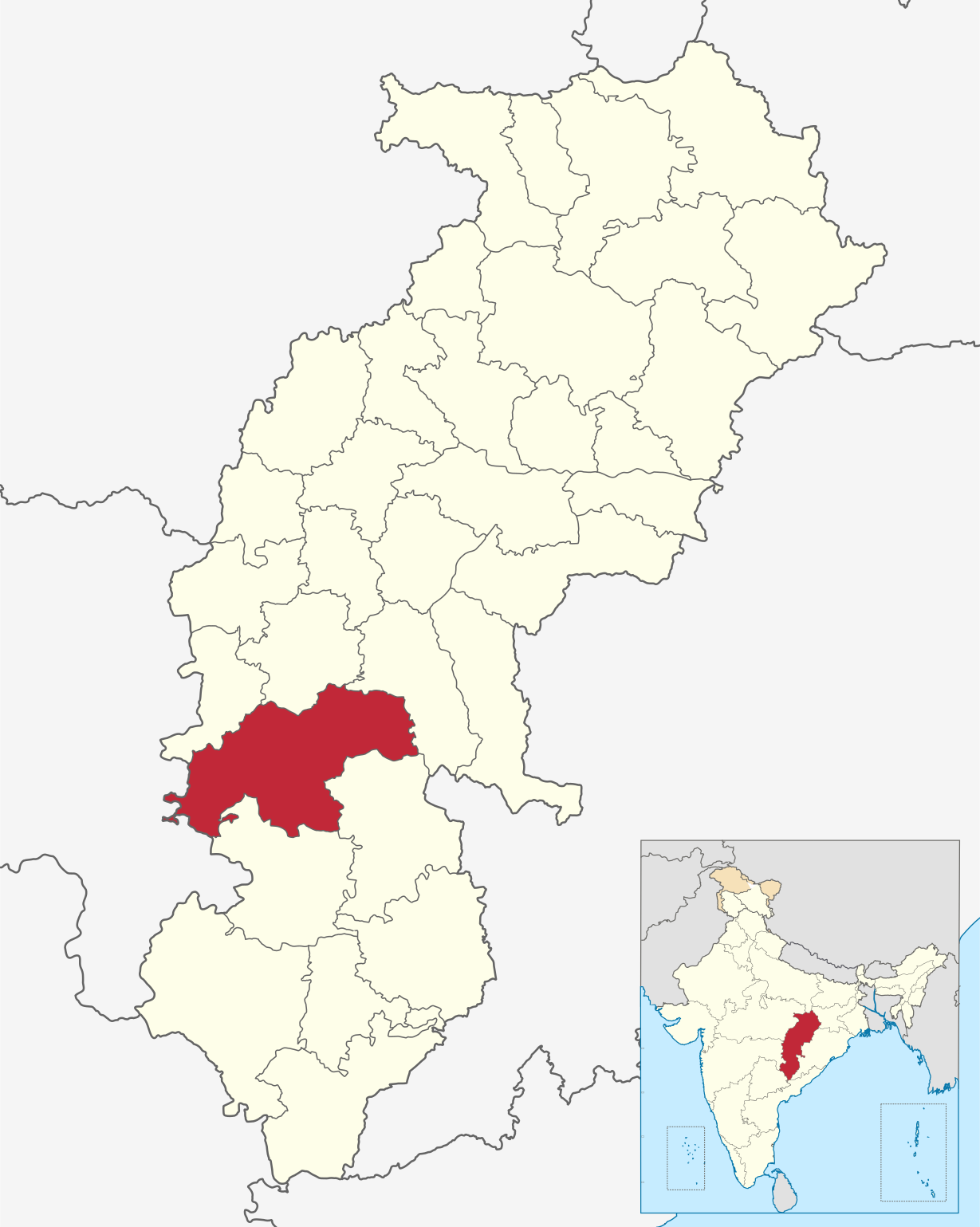
The attack came in the early afternoon, in a field in Largaon Markatola village under the Narharpur forest range in Chhattisgarh's Kanker district. Three siblings were working the land when a sloth bear came out of the forest edge. By the time it was over, two of them were dead.
Forest officials confirmed the identities of the deceased as Halal Khor Jurri, 38, and his elder sister Chamrin Bai, 40. A third sibling, Khorin Bai, 30, sustained injuries in the attack and was admitted to a local hospital. She is reported to have been injured while attempting to intervene. The bear was subsequently killed by villagers who gathered at the scene.
Sloth bear attacks are not anomalies in Chhattisgarh — they are a chronic, escalating pattern. The state sits at the edge of some of Central India's last contiguous forest tracts, and as agricultural expansion presses deeper into those margins, encounters between farming communities and wildlife have multiplied. Sloth bears, unlike tigers or leopards, tend to be encountered at close range before anyone knows they are there, often while a bear is foraging. They do not hunt humans, but they attack with exceptional ferocity when startled, targeting the face and upper body. Survival frequently depends on how quickly bystanders can intervene — and how quickly forest and medical response can reach the scene.
Residents of Largaon Markatola and surrounding villages are not framing this as a random tragedy. They are calling it a failure. Local community members have stated directly that they had alerted forest department officials to the presence of the bear near human settlement areas prior to the attack and received no meaningful response. That allegation — that the department was warned and did not act — is what transforms a wildlife incident into a governance story.
Forest department officials have confirmed the deaths and noted that compensation procedures under relevant state wildlife policies would be initiated. That response, while procedurally accurate, lands badly in a community that has just watched two of its own buried. Compensation frameworks in Indian states for wildlife-conflict fatalities are notoriously slow, bureaucratically burdensome, and frequently insufficient relative to the economic and social loss sustained by rural families who depend on agricultural labor. A family that loses two working adults does not recover on a government disbursement timeline.
The Kanker killings are also not the only bear fatalities in Chhattisgarh this week. A separate attack in Dhamtari district added to the toll, bringing the combined death count from recent sloth bear encounters in the state to at least four, with additional injuries. When fatalities cluster like this, the instinct of forest departments and state governments is to treat each incident as discrete. The data argues otherwise. These are symptoms of a structural problem: shrinking buffer zones, degraded forest corridors that push wildlife toward agricultural land, and an early-warning and rapid-response infrastructure that is not built for the density of human-wildlife contact the current landscape produces.
The crowd response — killing the bear after the attack — reflects both grief and rage, but it also signals something forest managers should read carefully. When communities feel that the state will not protect them, they protect themselves. That is not a conservation outcome anyone wants, and it does not happen in isolation. Villages that lose family members and livestock to wildlife, receive slow compensation, and see no preventive action from authorities do not become wildlife advocates. They become adversaries of wildlife policy, and sometimes of the animals themselves.
Chhattisgarh's forests are genuinely valuable — for biodiversity, for carbon, for the adivasi and rural communities whose lives are bound to them. Protecting that value requires a social contract between the state, forest communities, and conservation institutions that takes human safety as seriously as animal protection. The deaths of Halal Khor Jurri and Chamrin Bai are a brutal measure of how far that contract currently falls short.
Who is covering this (13+ outlets)
- KalingaTVTwo siblings killed, one injured in bear attack
- News9liveWild bear attacks leave four dead, three injured in Chhattisgarh
- Odisha News, Odisha Latest news, Odisha Daily - OrissaPOSTBear kills two siblings
- Haberler.comThe bear that ate two siblings alive was killed by the crowd.
- NDTVAngry Over Cub's Death, Wild Bear Kills Man, Sister In Chhattisgarh
- Signs Of The TImesFour killed in separate bear attacks in Chhattisgarh, India; siblings die protecting children
- UKNIPBrother and sister killed in bear attack as sibling seriously injured trying to save them
- The US SunBrother & sister killed by bear as sibling desperately tried to save them
- The New Indian ExpressFour killed in separate bear attacks in Chhattisgarh; siblings die protecting children
- LatestLYChhattisgarh Bear Attack: Brother and Sister Killed by Wild Bear in Kanker District, Another Sibling Injured (Video)
- The Times of IndiaBear kills 2 in Kanker, injures 2 others, residents blame forest officials for 'delayed response'
- Hindustan TimesBear attack kills man, sister in Chhattisgarh's Kanker; one injured
- ETV Bharat NewsBear Kills Siblings After Cub's Death In Chhattisgarh, Beaten By Villagers After It Was Tranquilised
See what people are saying about this story on X.